
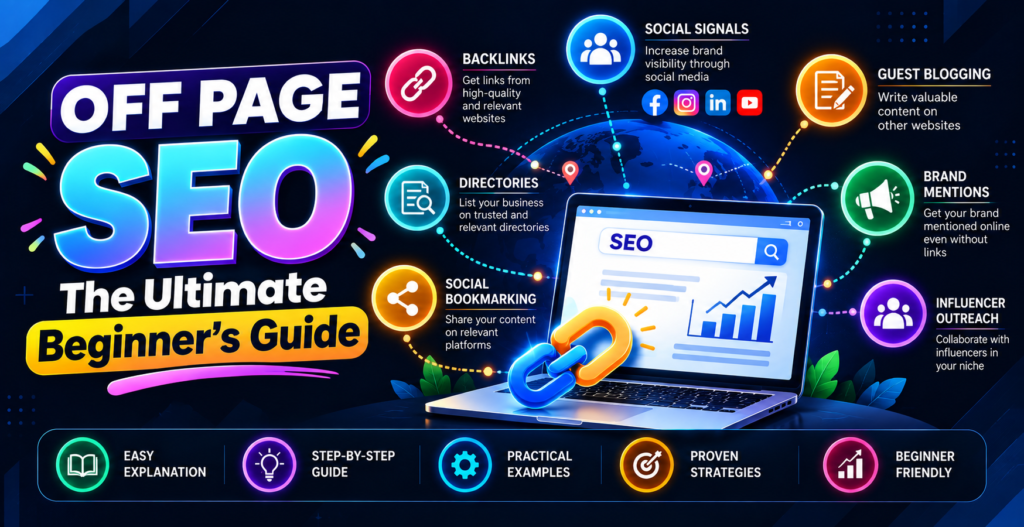
If you want your website to rank at the top of search engine results, understanding Off-Page SEO is essential for building real authority and trust online. Imagine your website as a job candidate attending an interview. Your resume represents On-Page SEO, but Off-Page SEO is like having glowing recommendation letters from respected industry leaders. The more quality recommendations you have, the more likely Google will trust your website.
In simple terms, Off-Page SEO refers to all the promotion activities and optimization actions performed outside of your website to boost your search engine rankings.
While writing great articles attracts readers, executing strong Off-Page SEO proves to search engines that other people value your content. Whether you manage a small business, a personal blog, or an online shop, mastering Off-Page SEO helps you build credibility, beat competitors, and secure steady web traffic.
Why is Off-Page SEO Important for Beginners?
Focusing on Off-Page SEO tells Google that your website is popular, reliable, and trusted across the internet. Here is why prioritizing Off-Page SEO is essential for expanding your online presence:
- Builds Search Engine Trust: Search engines treat external mentions and links as votes of confidence. Proper Off-Page SEO helps establish your website as a reputable source.
- Increases Website Authority: Getting featured on respected websites boosts your domain strength, making it much easier for all your future pages to rank higher.
- Drives Direct Referral Traffic: When popular blogs or news sites link to your articles, interested users click those links and visit your site directly.
- Expands Brand Awareness: Promoting your content across external platforms introduces your business to entirely new audiences.
The Core Elements of Off-Page SEO
Building online authority requires focusing on a few essential pillars. Here is a breakdown of the key factors that drive successful Off-Page SEO:
1. Link Building (Backlinks)
Backlinks are links pointing from an external website back to your web page. They remain one of the strongest ranking signals.
- Quality Over Quantity: A single backlink from a highly respected site is worth far more than dozens of low-quality links.
- Natural Context: Earn links from websites that share topics related to your niche so the recommendation feels natural to search bots.
2. Guest Posting and Outreach
Guest blogging involves writing helpful articles for other popular industry blogs.
- Share Expertise: Provide valuable content to another audience in exchange for a credit link back to your website.
- Build Relationships: Network with other website creators to create long-term cross-promotions.
3. Social Media Signals and Promotion
Sharing your web content across popular social platforms brings instant visibility.
- Increase Content Reach: Posting articles on platforms like LinkedIn, Facebook, and Twitter encourages readers to share your pages further. (If you want to grow your audience across social networks, check out our beginner’s guide on social media marketing strategies).
- Drive Viral Engagement: Popular posts that get shared frequently attract natural attention and potential backlinks from bloggers.
4. Local Business Citations and Reviews
For businesses serving specific geographic areas, local listing signals play a major role.
- Directory Listings: Ensure your company name, physical address, and phone number are identical across business directories.
- Customer Reviews: Collecting positive reviews on your Google Business Profile strengthens local trust signals significantly.
Off-Page SEO vs. On-Page SEO vs. Technical SEO
To see how everything fits together, compare these three main pillars of search engine optimization:
| SEO Category | Primary Focus | Practical Example |
| Off-Page SEO | Building authority and trust outside your website | Earning backlinks, guest blogging, and brand mentions |
| On-Page SEO | Fine-tuning written content and HTML tags directly on your page | Writing clear headers, titles, and image alt text (Learn more in our guide on On-Page SEO strategies) |
| Technical SEO | Enhancing site speed, mobile setup, and crawl efficiency | Installing SSL certificates and submitting sitemaps (Learn more in our guide on technical SEO basics) |
Simple Step-by-Step Off-Page SEO Checklist
Before launching your promotion campaigns, run through this practical Off-Page SEO checklist:
- Create Link-Worthy Content: Have you published detailed, helpful guides that people naturally want to share and reference? (To understand search engine basics, read our guide on what is SEO and how it works).
- Identify Outreach Opportunities: Have you listed relevant blogs in your industry that accept guest posts?
- Promote on Social Media: Did you share your new article across your active social channels with engaging captions?
- Claim Business Profiles: Is your business listed correctly on essential local platforms like Google Business Profile?
- Monitor Brand Mentions: Are you tracking when other websites talk about your brand so you can request a proper link back?
Top Free Off-Page SEO Tools for Beginners
You do not need an expensive marketing budget to start building trust. Here are top free tools to support your efforts:
- Ahrefs Backlink Checker: Shows you free top backlinks pointing to any domain or specific page.
- Google Alerts: Sends email notifications whenever someone mentions your business name or topic online.
- Moz Link Explorer: Measures your domain authority and analyzes external link profiles for free.
Frequently Asked Questions (FAQs)
What is Off-Page SEO in simple terms?
Off-Page SEO refers to all the promotion activities, like earning backlinks and social shares, done outside your website to improve Google rankings.
Why is link building important for Off-Page SEO?
Link building is crucial for Off-Page SEO because search engines treat backlinks from trusted sites as votes of confidence for your content.
How is Off-Page SEO different from On-Page SEO?
Off-Page SEO focuses on external reputation and authority, while On-Page SEO deals directly with optimizing content on your own web pages.
Can social media help with Off-Page SEO?
Yes, sharing content on social media supports Off-Page SEO by increasing visibility, driving traffic, and attracting natural backlink opportunities